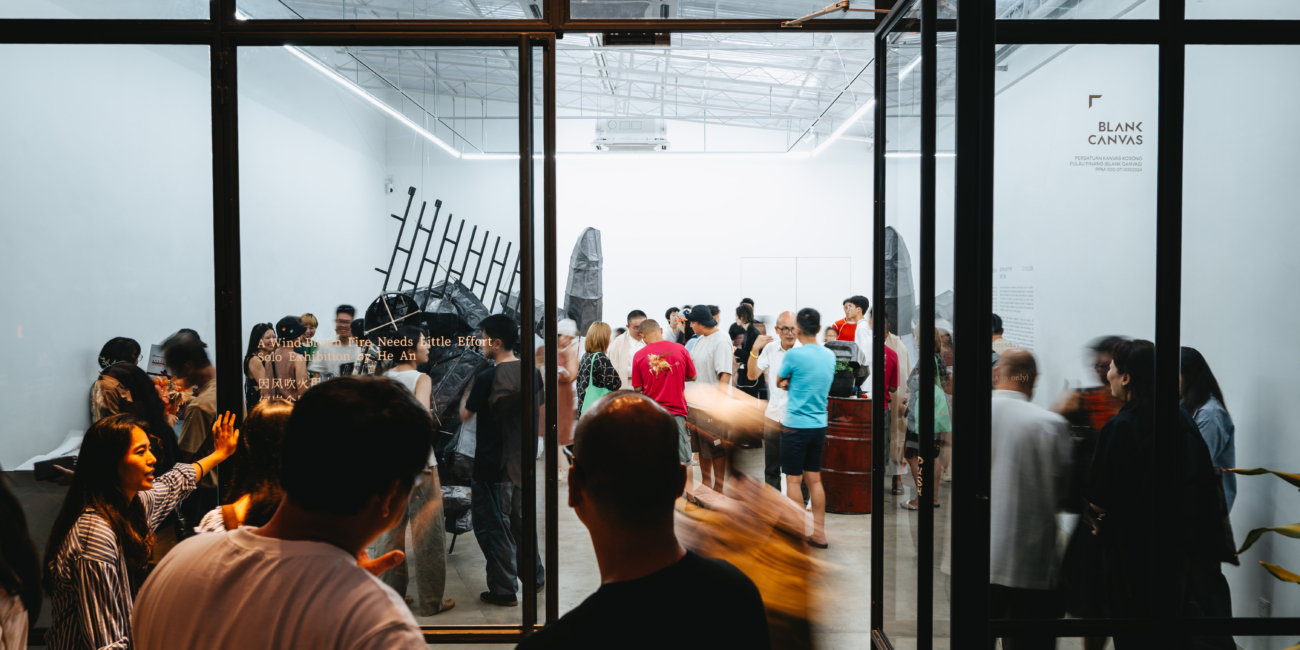
A Wind-Blown Fire Needs Little Effort 因风吹火用力不多

7 Feb 2026 - 10 May 2026

HE AN (何岸)

Exhibition Guide: View Here

Special thanks to Gallery daSein.

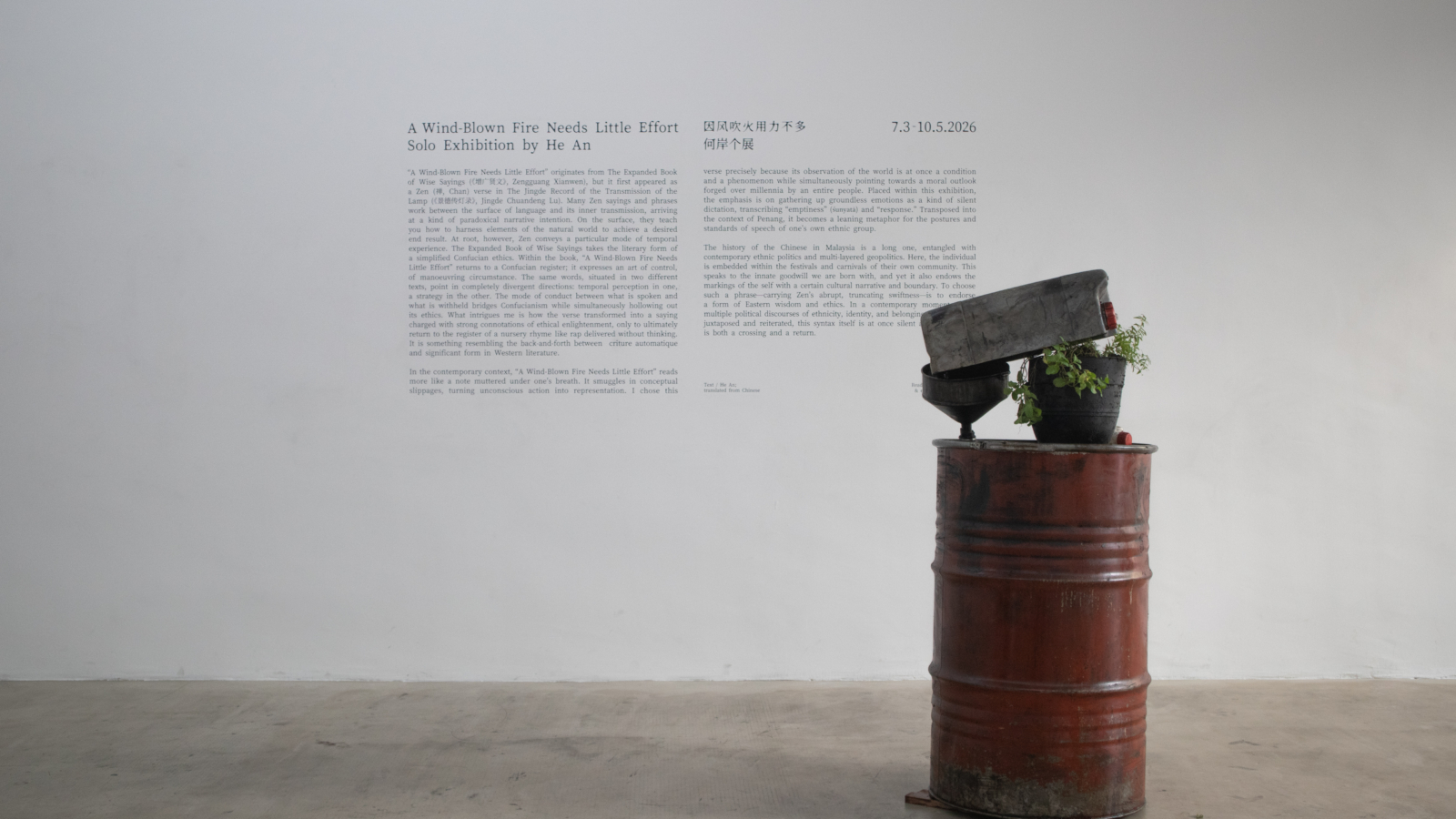
“A Wind-Blown Fire Needs Little Effort” originates from The Expanded Book of Wise Sayings (《增广贤文》, Zengguang Xianwen), but it first appeared as a Zen (禅, Chan) verse in The Jingde Record of the Transmission of the Lamp (《景德传灯录》, Jingde Chuandeng Lu)ⁱⁱ. Many Zen sayings and phrases work between the surface of language and its inner transmission, arriving at a kind of paradoxical narrative intention. On the surface, they teach you how to harness elements of the natural world to achieve a desired end result. At root, however, Zen conveys a particular mode of temporal experience.  The Expanded Book of Wise Sayings takes the literary form of a simplified Confucian ethics. Within the book, “A Wind-Blown Fire Needs Little Effort” returns to a Confucian register; it expresses an art of control, of manoeuvring circumstance. The same words, situated in two different texts, point in completely divergent directions: temporal perception in one, a strategy in the other. The mode of conduct between what is spoken and what is withheld bridges Confucianism while simultaneously hollowing out its ethics. What intrigues me is how the verse transformed into a saying charged with strong connotations of ethical enlightenment, only to ultimately return to the register of a nursery rhyme—like rap delivered without thinking. It is something resembling the back-and-forth between écriture automatique and significant form in Western literatureⁱⁱⁱ.

[i] A Chinese proverbial anthology compiled during the Ming Dynasty (c. 16th century), widely used for centuries as a primer in children’s moral education. Its aphoristic style (short, rhythmic, easily memorized) gives it the quality of nursery rhyme or folk chant that He An references.

[ii] A foundational Song Dynasty text (1004 CE) documenting the lineages and teachings of Zen (Chan) Buddhist masters. It is one of the most important collections of Zen dialogues, encounter stories, and gāthā (short verse teachings).

[iii] Écriture automatique and significant form: He An draws a parallel between two Western critical concepts: the Surrealist practice of automatic writing (writing without conscious control, championed by André Breton) and Clive Bell’s theory of “significant form” (the idea that aesthetic value lies in arrangements of form rather than representational content).

因风吹火,用力不多来自《增广贤文》,最早是《景德传灯录》里的一句禅宗偈语。禅宗的许多话语和短句,很大部分是在语言表层传达和内在传递中取得一种悖反的叙述意向——表面看是教诲你如何运用自然界的因素达到实现最终事物的结果,其根本上是禅宗仅为描述一种关于时间的经验。《增广贤文》的文体是简化的儒家伦理,这句话在此又回到了儒家的范围内,这是一种驾驭术。同样的话语两种文本中所载方向截然不同,将要述说和欲言又止之间要采取的行为方式等同于跨越和链接了儒家又抽空了儒家的那些伦理。我感兴趣是它后来转换成了带有强烈伦理启蒙的语言,最终又回到一种儿歌的文体话语,像不假思索的说唱,有点类似杂糅了西方对文本的无意识形态写作和有意味形式来回穿搭的方式

In the contemporary context, “A Wind-Blown Fire Needs Little Effort” reads more like a note muttered under one’s breath. It smuggles in conceptual slippages, turning unconscious action into representation. I chose this verse precisely because its observation of the world is at once a condition and a phenomenon while simultaneously pointing towards a moral outlook forged over millennia by an entire people. Placed within this exhibition, the emphasis is on gathering up groundless emotions as a kind of silent dictation, transcribing “emptiness” (śūnyatā) and “response.” Transposed into the context of Penang, it becomes a leaning metaphor for the postures and standards of speech of one’s own ethnic group.

The history of the Chinese in Malaysia is a long one, entangled with contemporary ethnic politics and multi-layered geopolitics. Here, the individual is embedded within the festivals and carnivals of their own community. This speaks to the innate goodwill we are born with, and yet it also endows the markings of the self with a certain cultural narrative and boundary. To choose such a phrase—carrying Zen’s abrupt, truncating swiftness—is to endorse a form of Eastern wisdom and ethics. In a contemporary moment where multiple political discourses of ethnicity, identity, and belonging are constantly juxtaposed and reiterated, this syntax itself is at once silent and speaking: it is both a crossing and a return.

Text / He An; translated from Chinese

当代语境下,因风吹火,用力不多又像是一句喃喃自语的标注,裹挟了偷换概念的状态,让无意识的行动变成表征。最终选择这句话,正因为它对物像的观察是一种状态和现象,同时又指向了一个族群一千多年以来所形成的伦理观念,放在此次展览中,更多强调的是把无来由的情绪归纳作为默写空无回应的方式,置换在槟城这个语境中,倾向式的暗喻关于自身族群的姿态和言说标准。马来西亚的华人历史久远而纠缠了当代族群与多地缘政治,这里个体会被嵌入自我族群的节日和狂欢中,即是关于人类的那些与生俱来的善意又让自我的标记具有了某种文化上的叙述与边界。选择了这样的带有禅宗截断式的快语,是对于东方式的智慧和伦理的背书,在当代被并置和反复强调的,关于族群、身份与归宿的多重政治话语中,这样的语法本身就是一种沉默而又在言说的跨越与回归

/

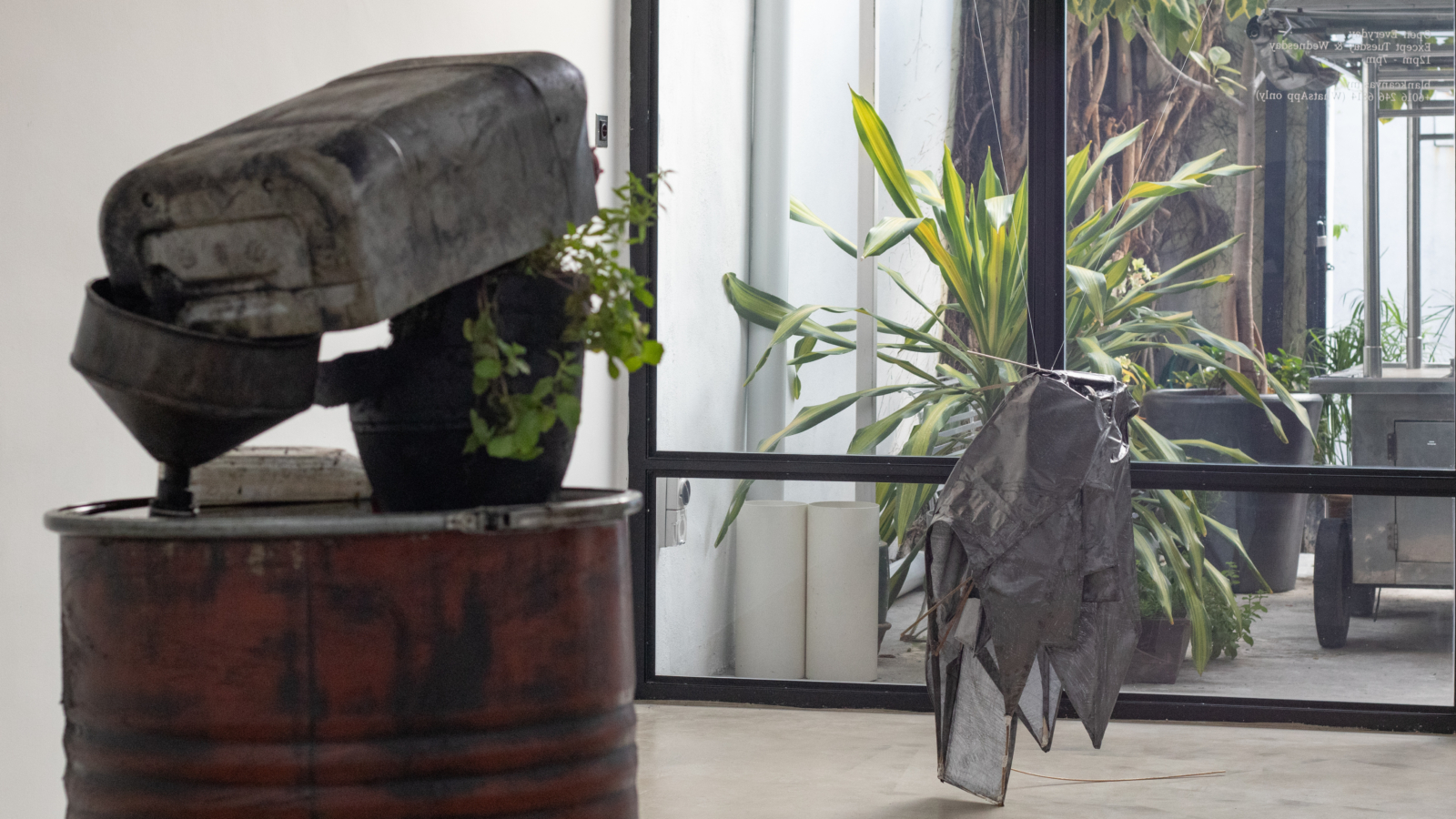
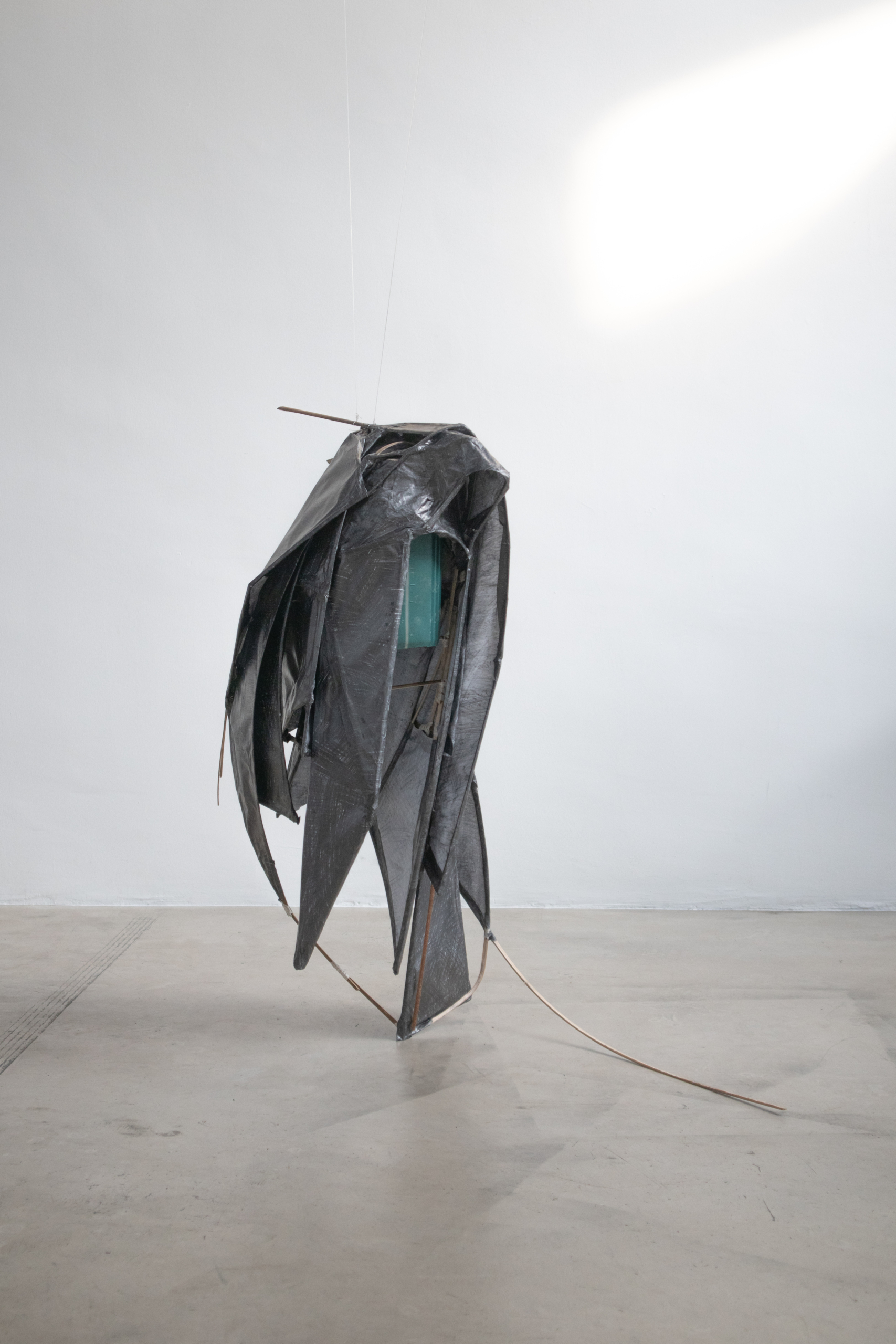
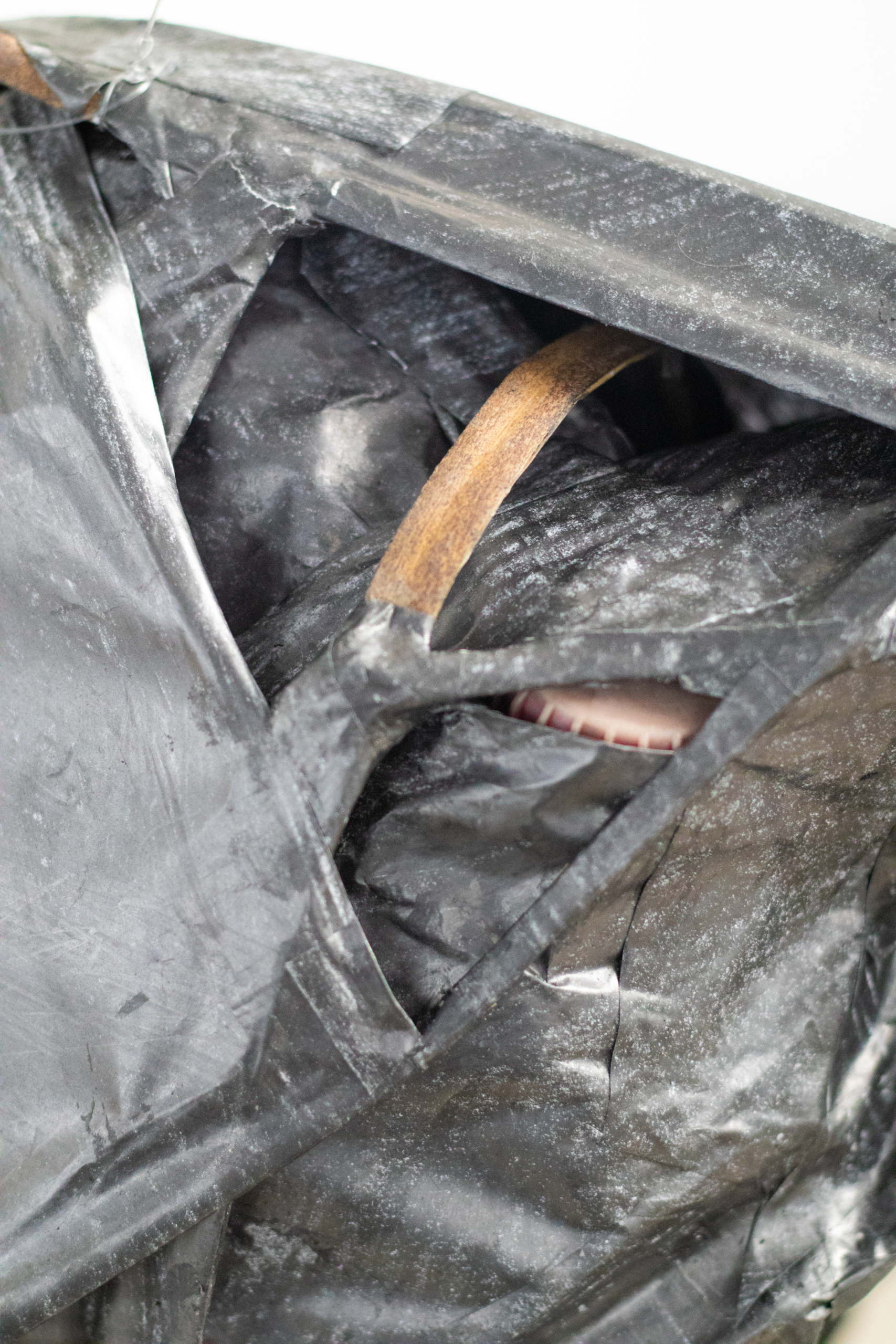
BRIDE (新娘)

2026
94 (H) x 55 (L) x 42 (W) cm
Bamboo, paper, pencil, found object (竹子,纸,铅笔,拾得物)

Fabricated by Koh Eng Keat (Traditional Paper Effigy Artisan, Penang)
制作:高永杰(槟城传统纸扎手工艺人)

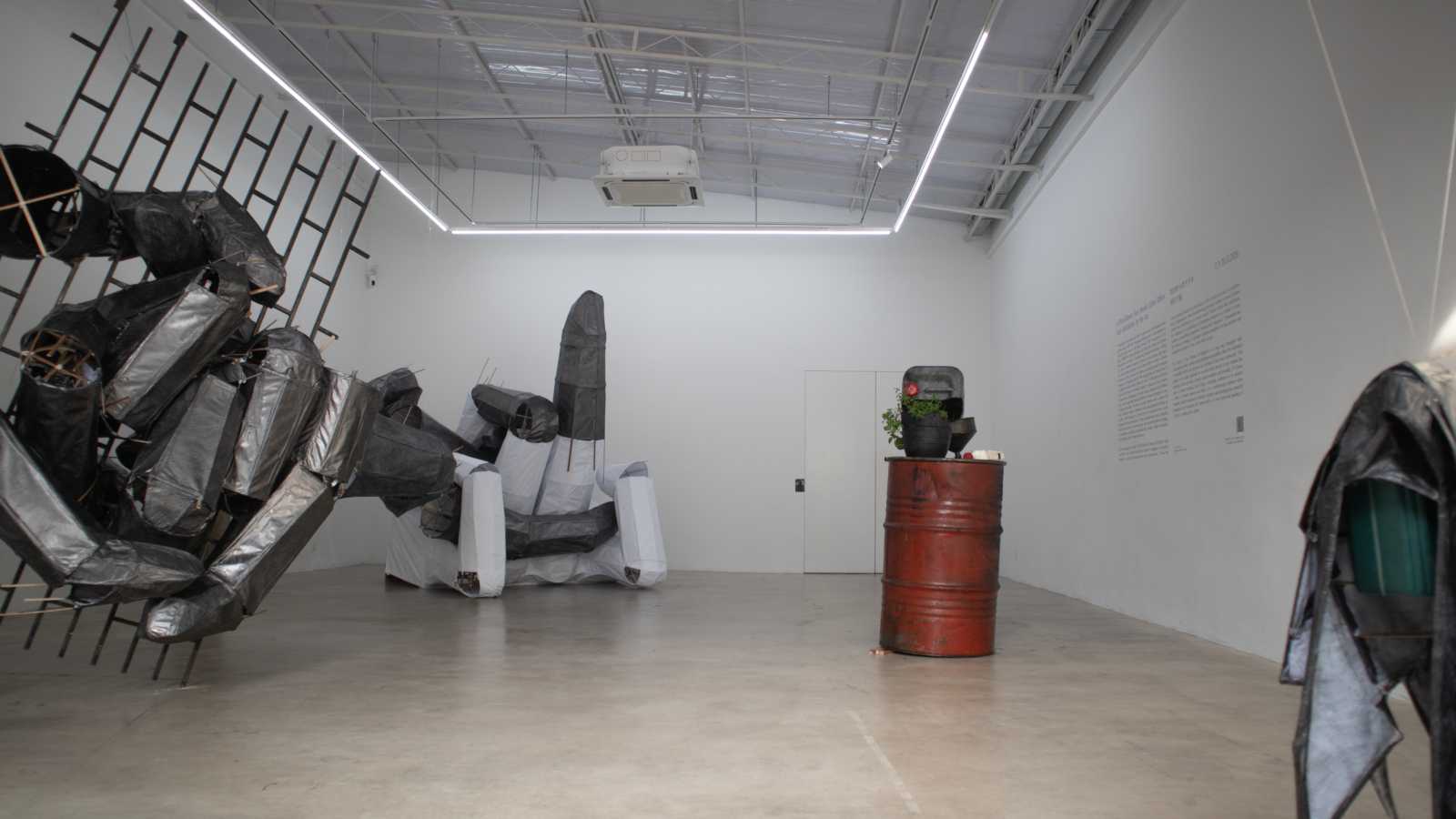
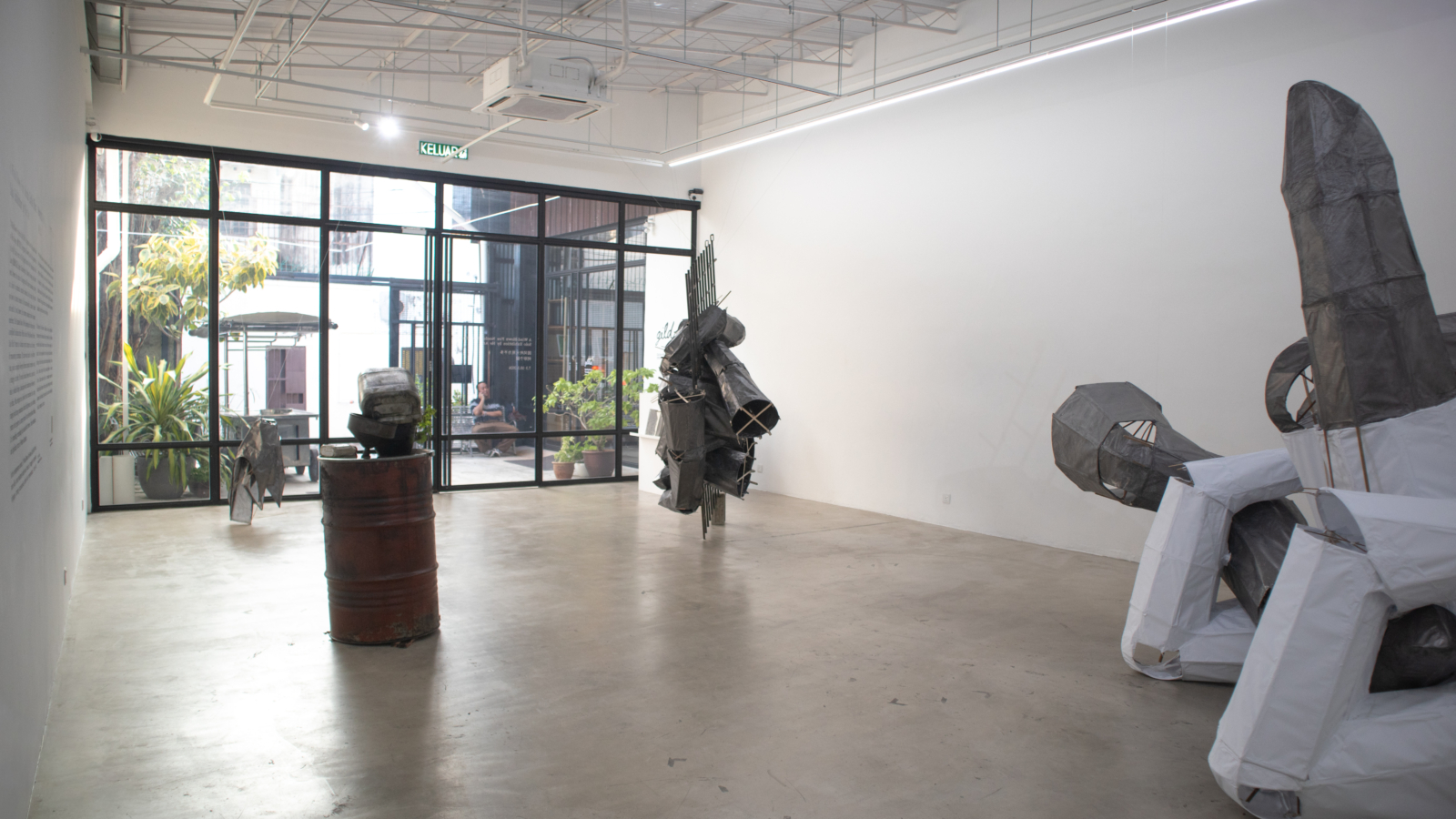
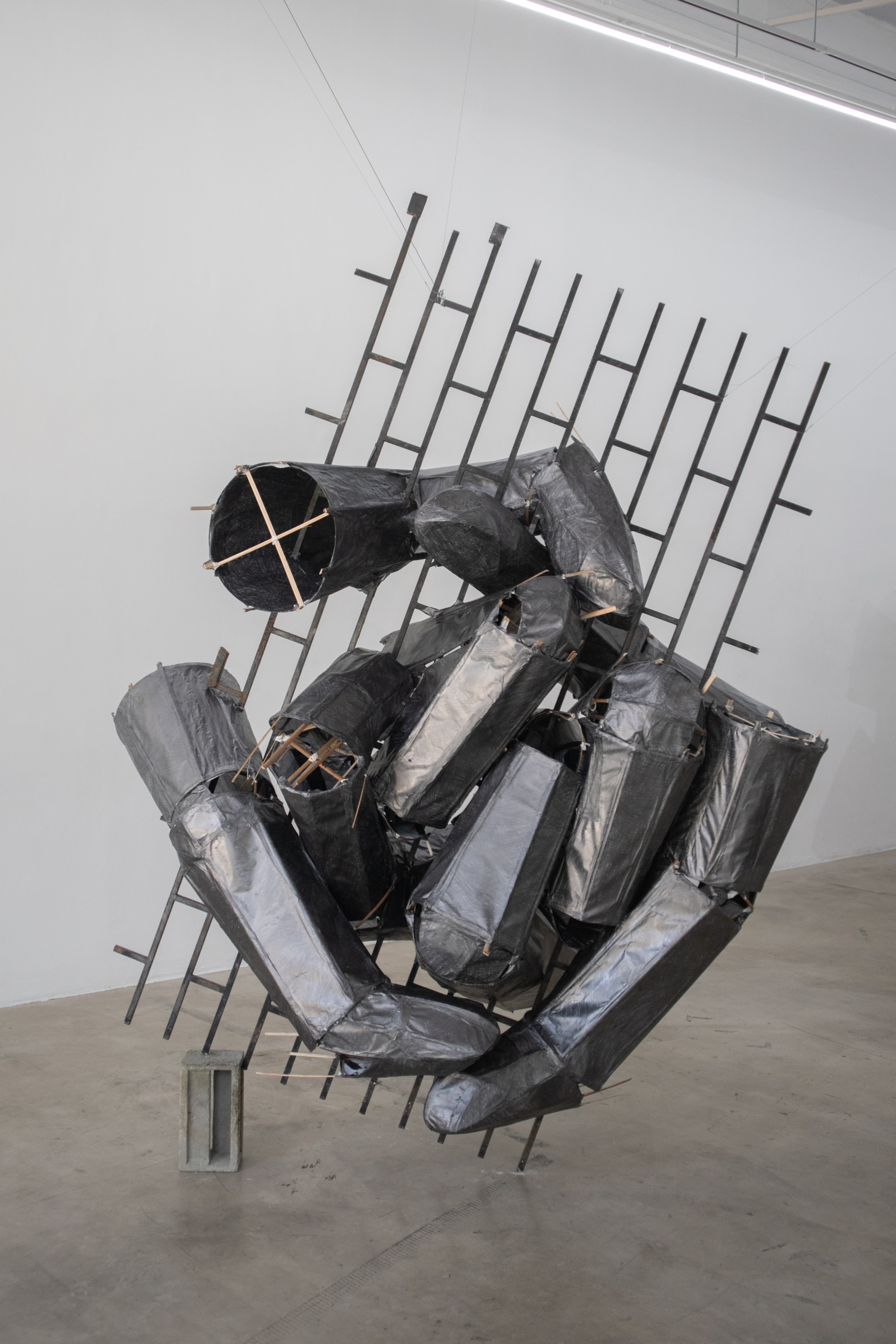
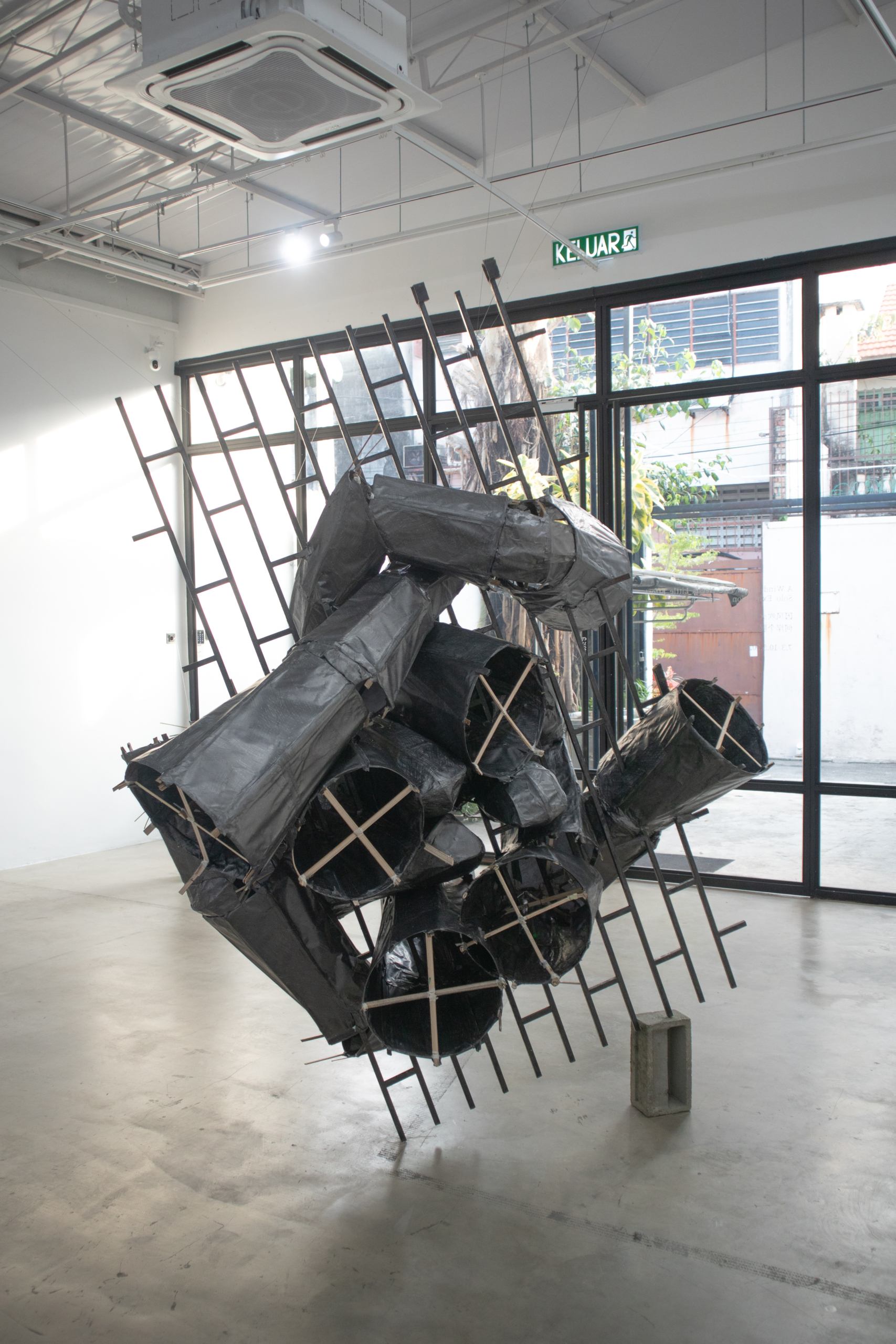
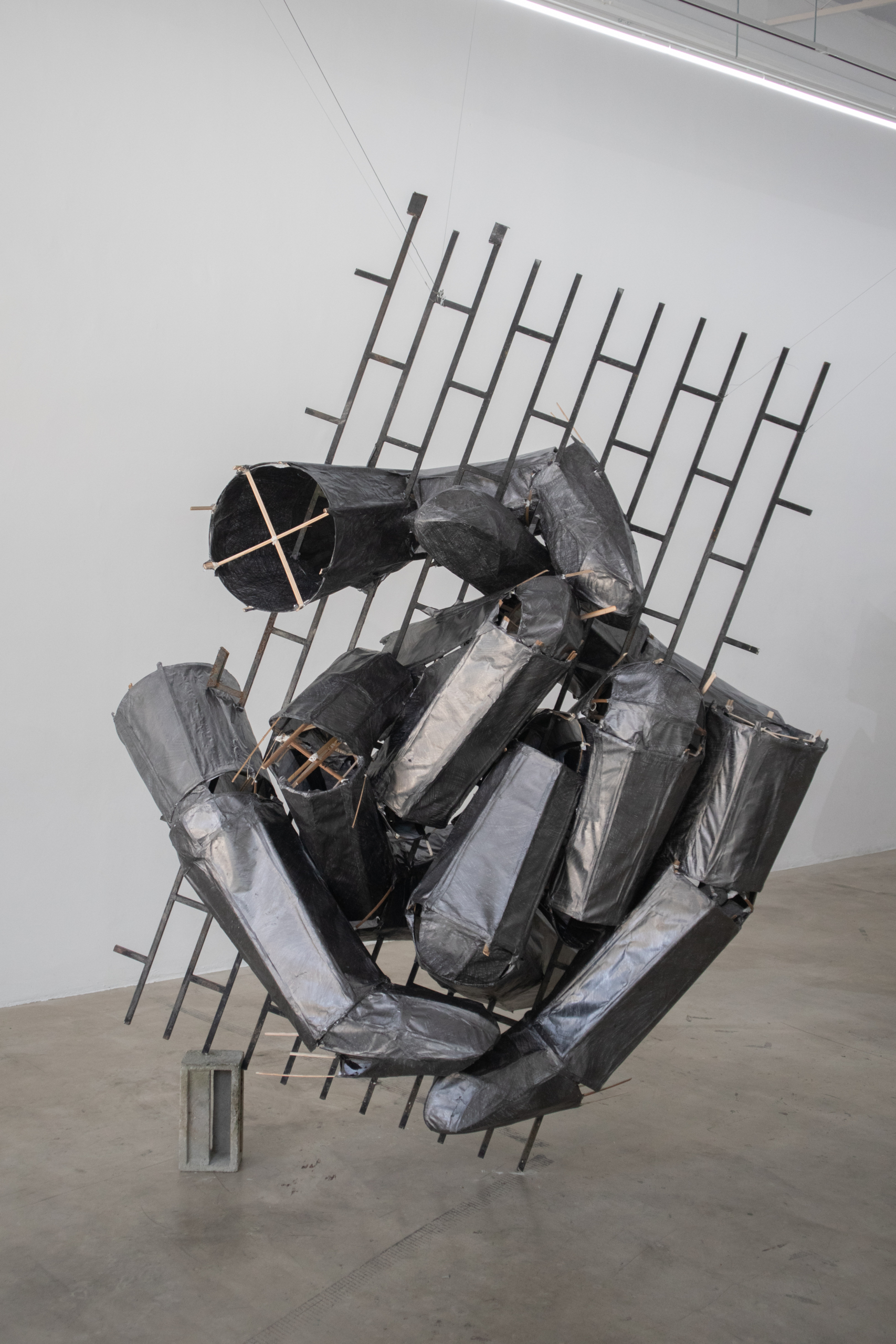
A WIND-BLOWN FIRE NEEDS LITTLE EFFORT (因风吹火用力不多)

2026
Bamboo, paper, pencil, grill date (竹子,纸,铅笔,铁栏杆)
232 (H) x 183 (W) x 133 (D) cm

Fabricated by Koh Eng Keat (Traditional Paper Effigy Artisan, Penang)
制作:高永杰(槟城传统纸扎手工艺人)

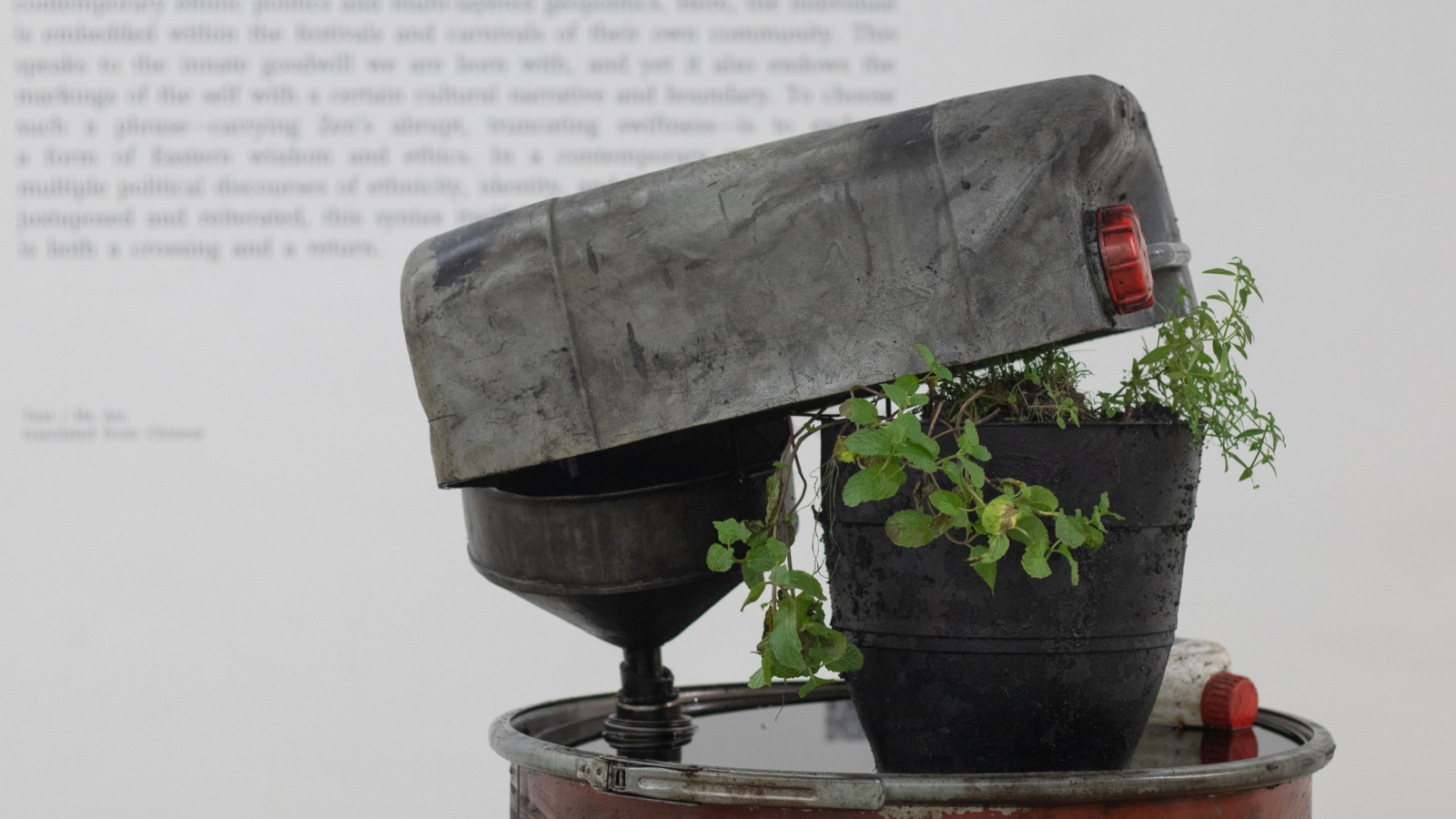
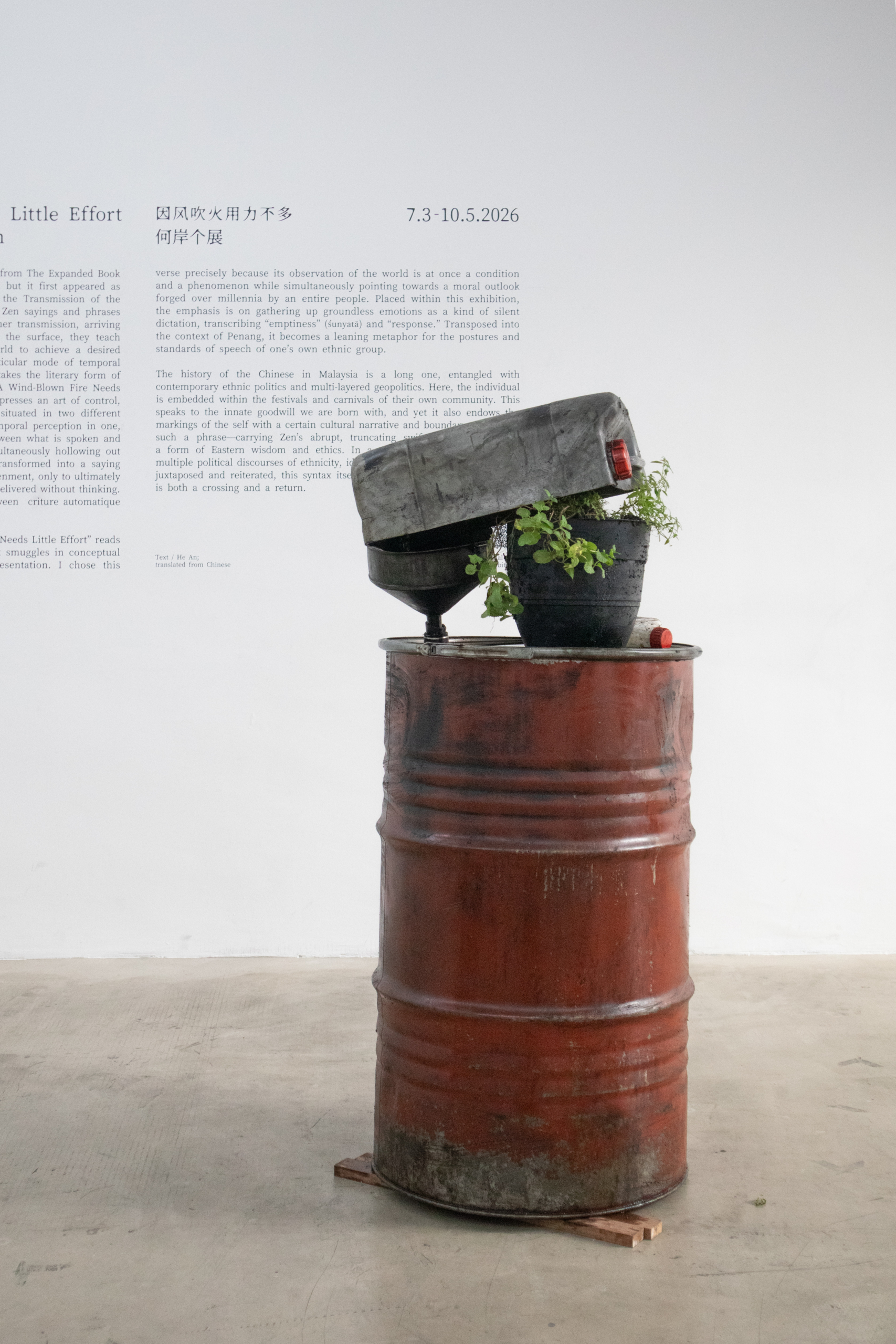
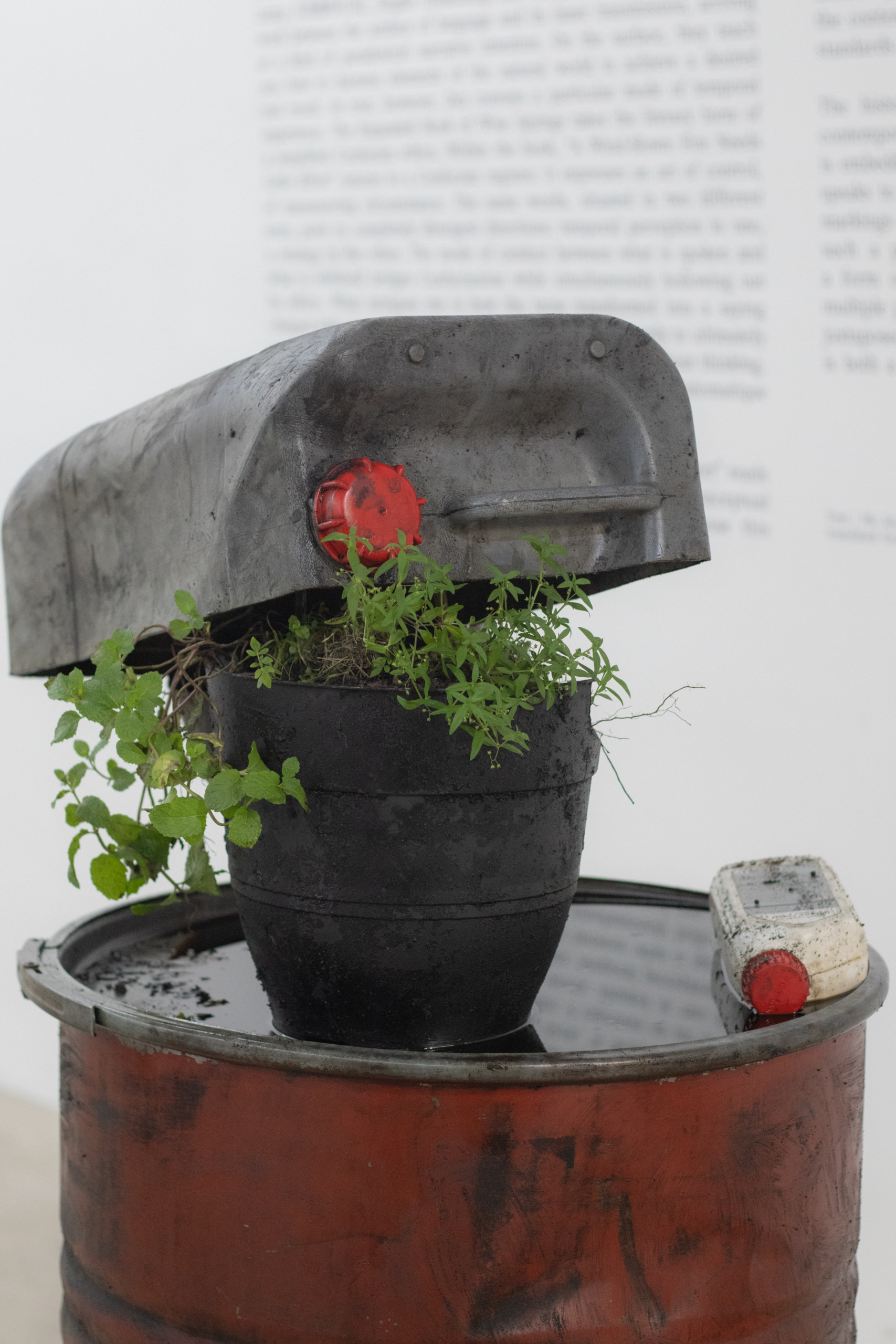
MAMA (妈妈)

2026
Found object (拾得物)
144  (H) x 65 (L) x 63 (W)  cm

Fabricated by Koh Eng Keat (Traditional Paper Effigy Artisan, Penang)
制作:高永杰(槟城传统纸扎手工艺人)

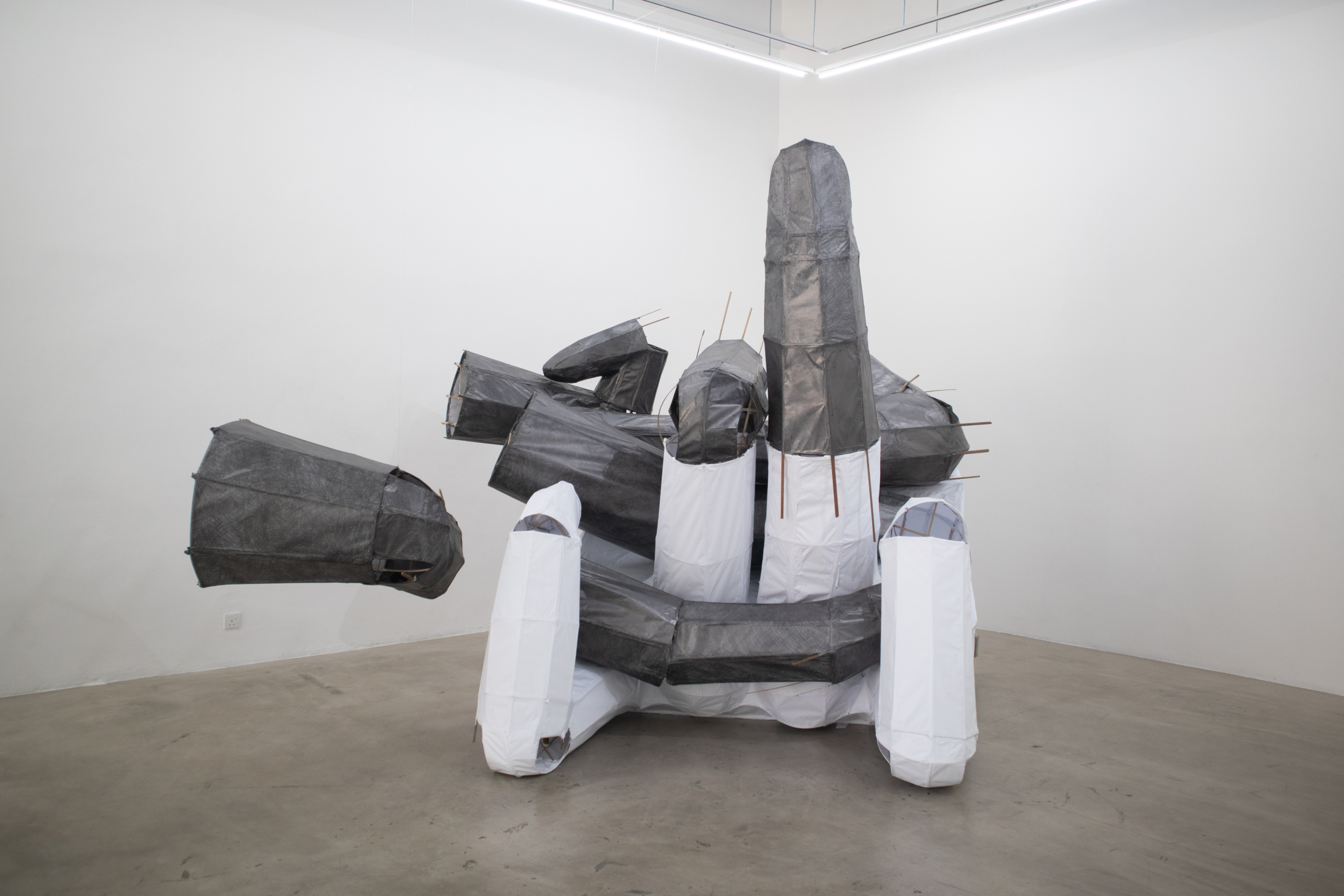
Swan (天鹅)

2026

Bamboo, paper, pencil (竹子,纸,铅笔)

Main Work (主体):258.5 (H) x 280 (W) x 245 (D)cm; Thumb (拇指):92 (H) x 96 (W) x 72 (D) cm

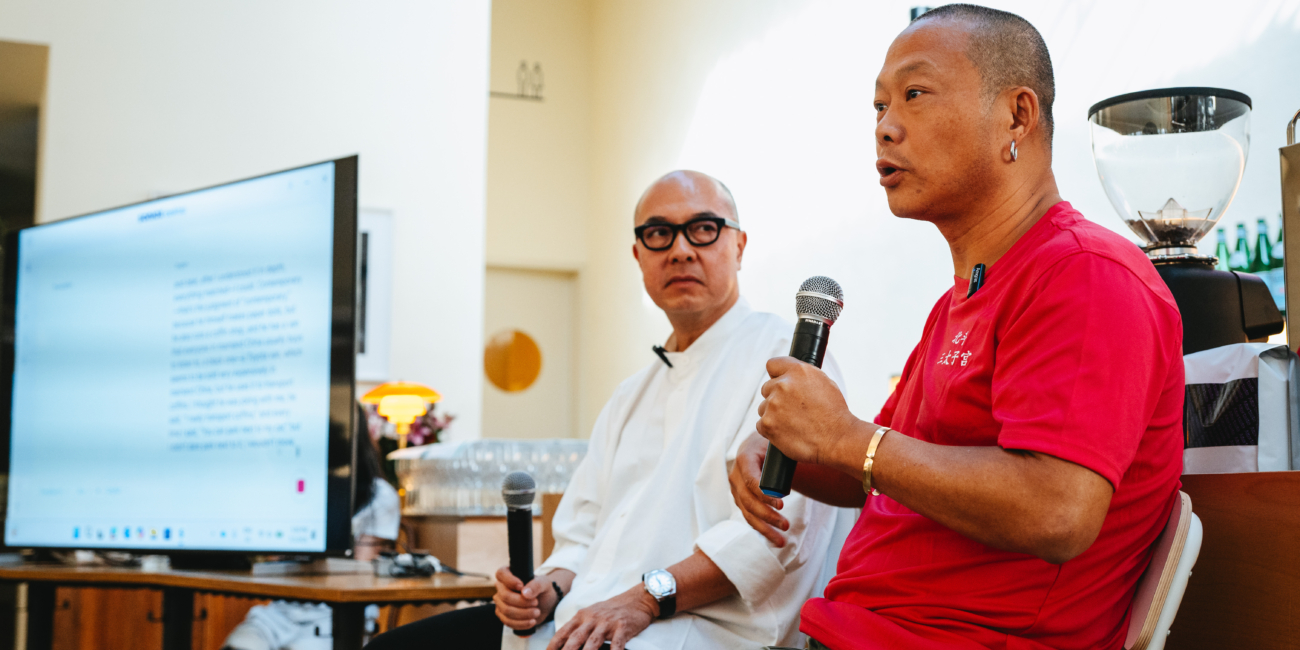
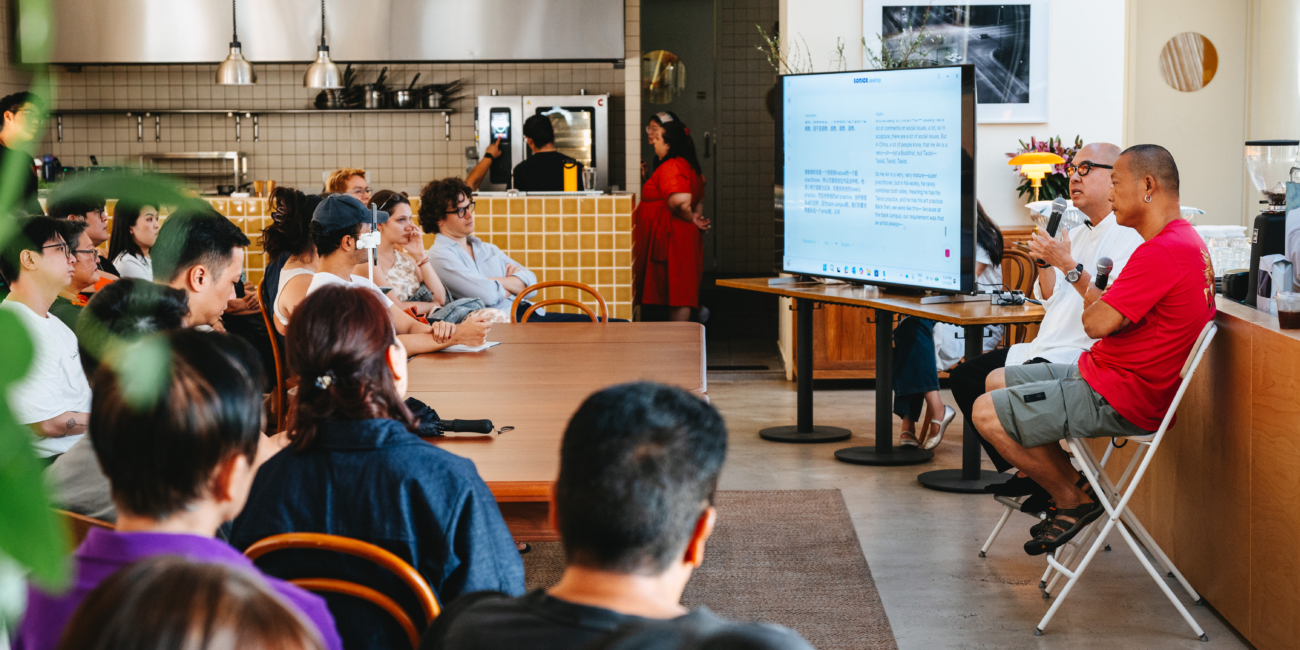
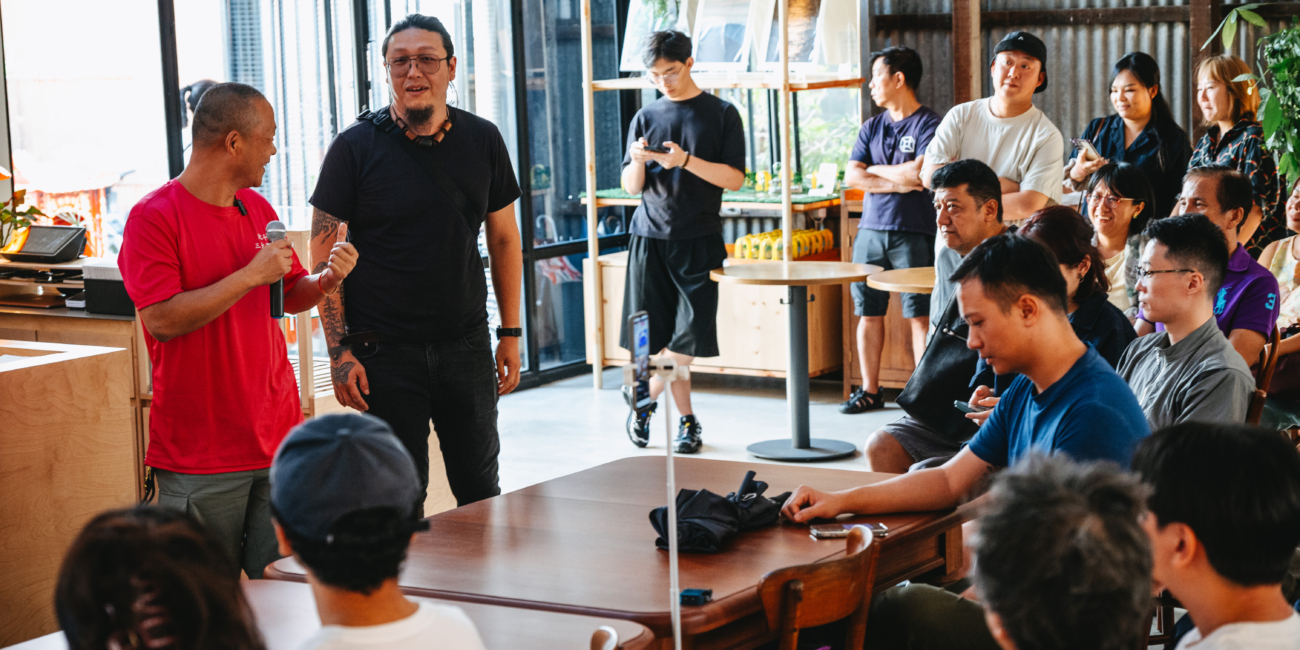
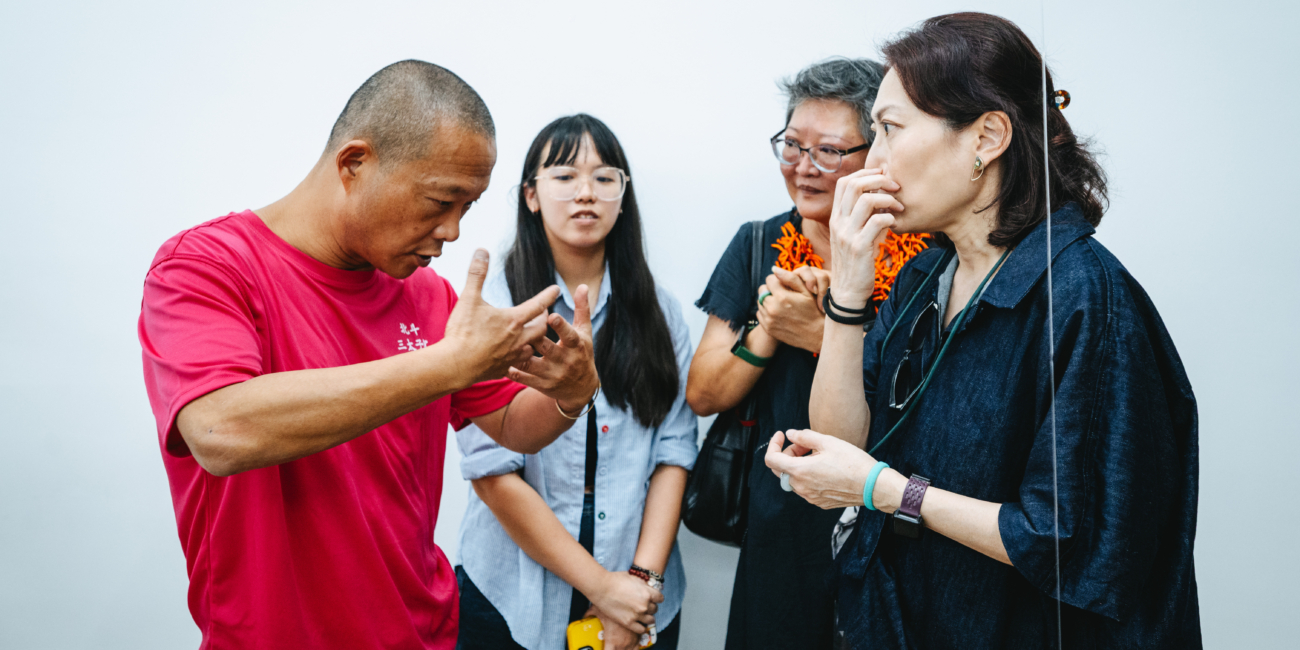
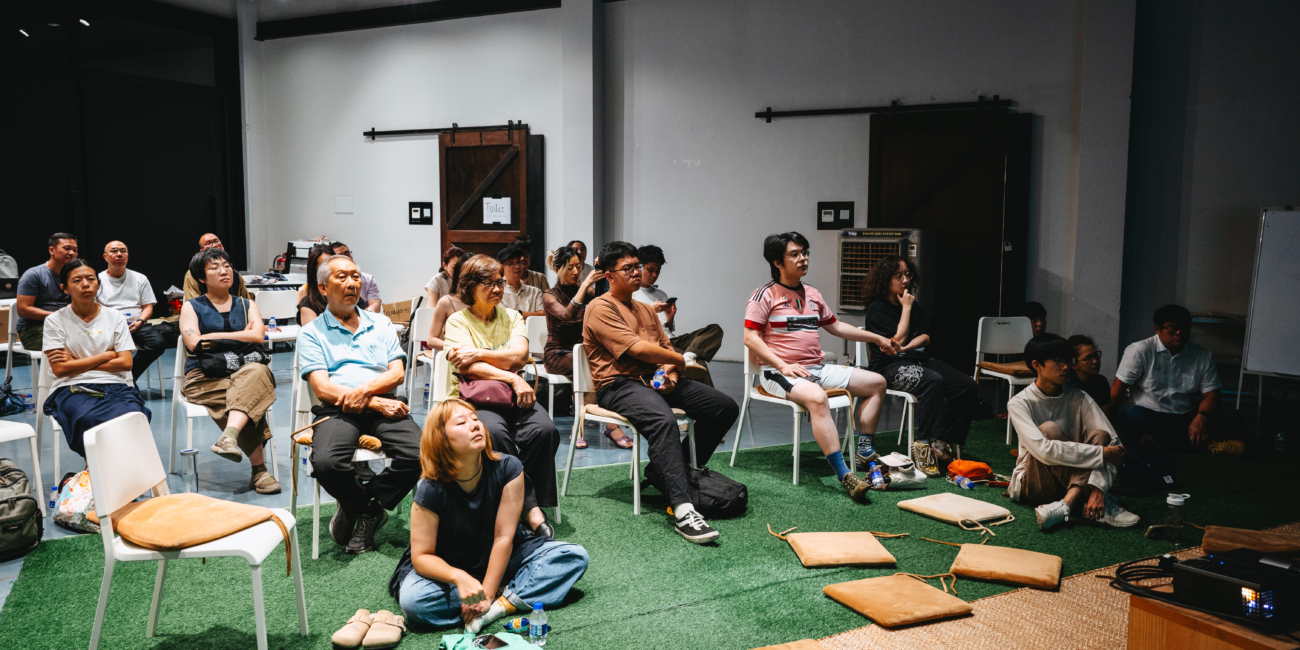
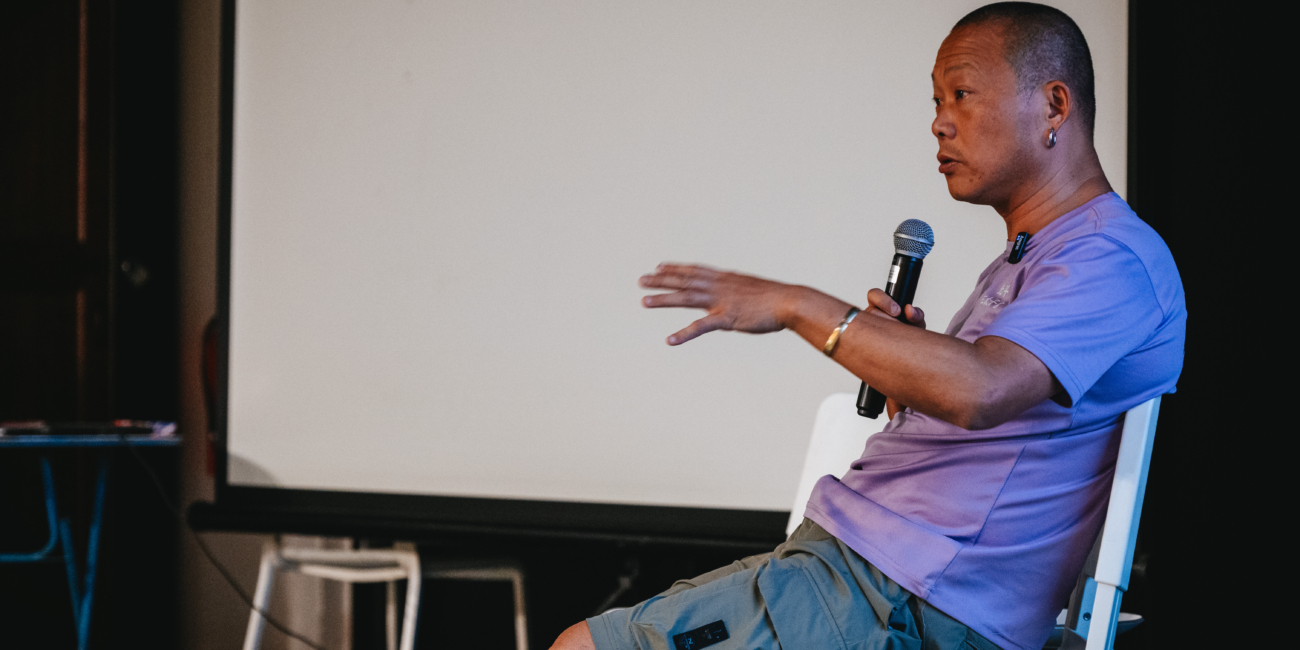
Artist Sharing (艺术家分享)

7 March 2026, Saturday, 5:00pm

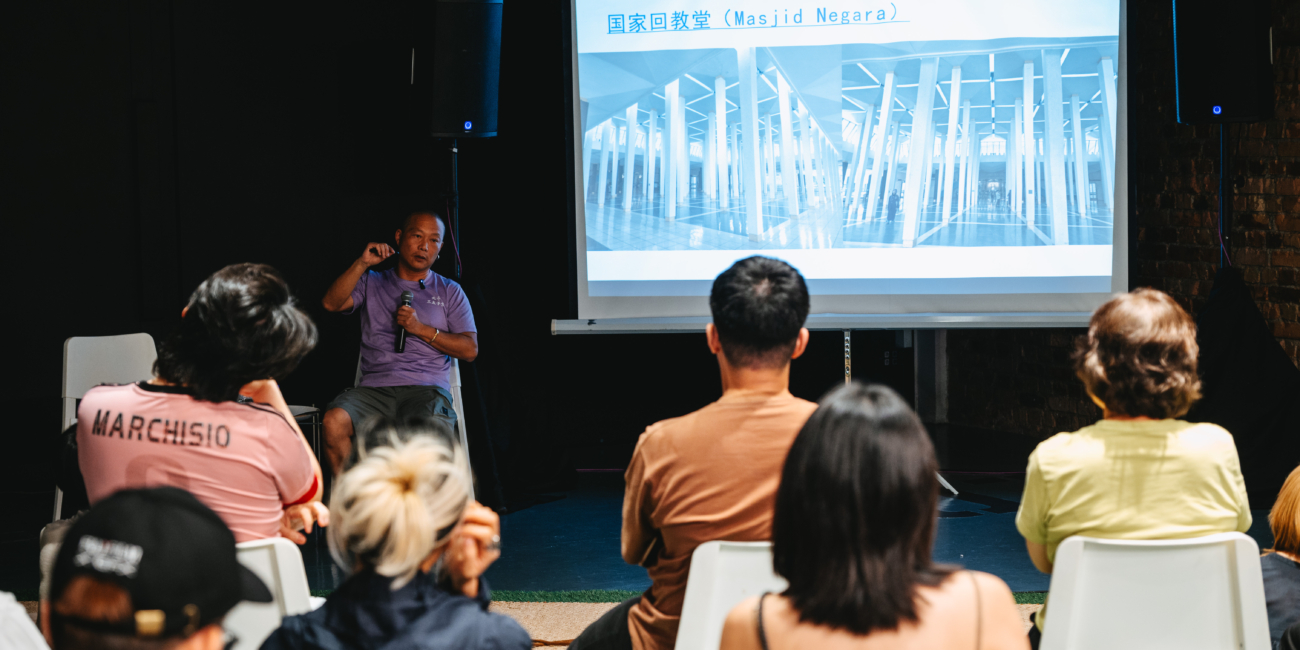
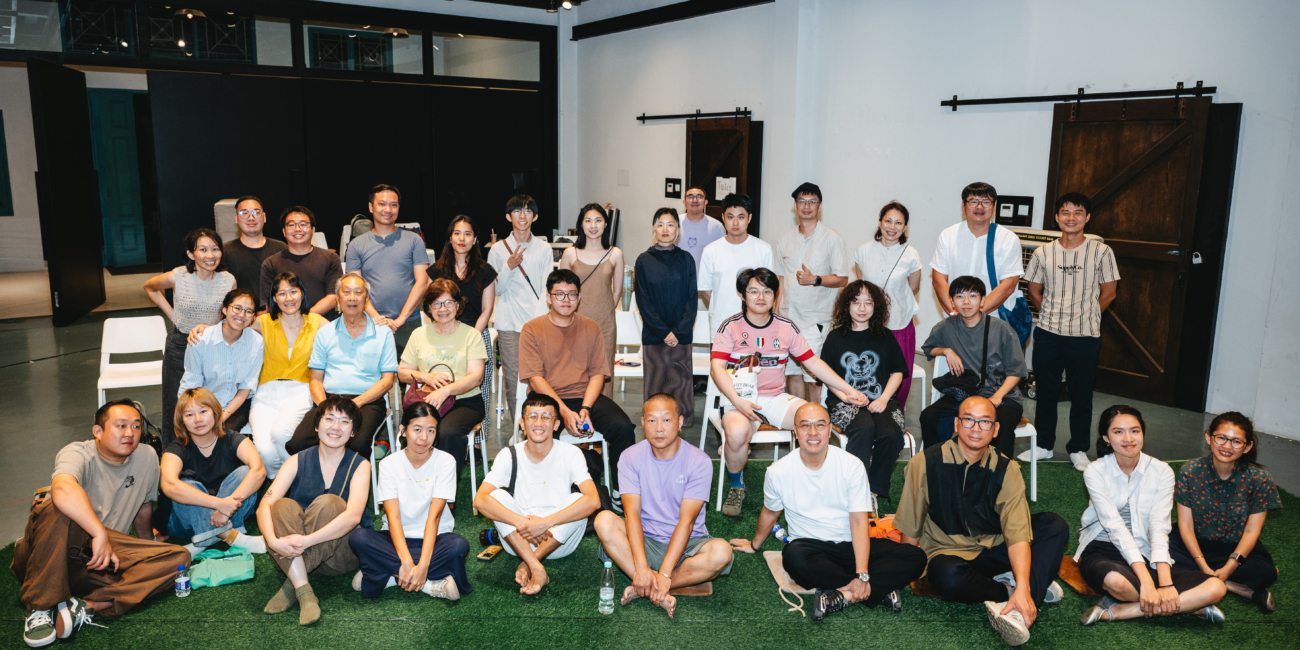
In conversation with Blank Canvas founder KY Leong, He An talked about his exhibition ‘A Wind-Blown Fire Needs Little Effort’, and the process of making the work with a local paper effigy artisan.

艺术家何岸与 Blank Canvas 创办人梁广义对谈,分享其个展《因风吹火用力不多》的创作理念,以及与本地传统纸扎手工艺人合作完成作品的过程。

Full Sharing (完整分享会): Watch Here (点击观看)

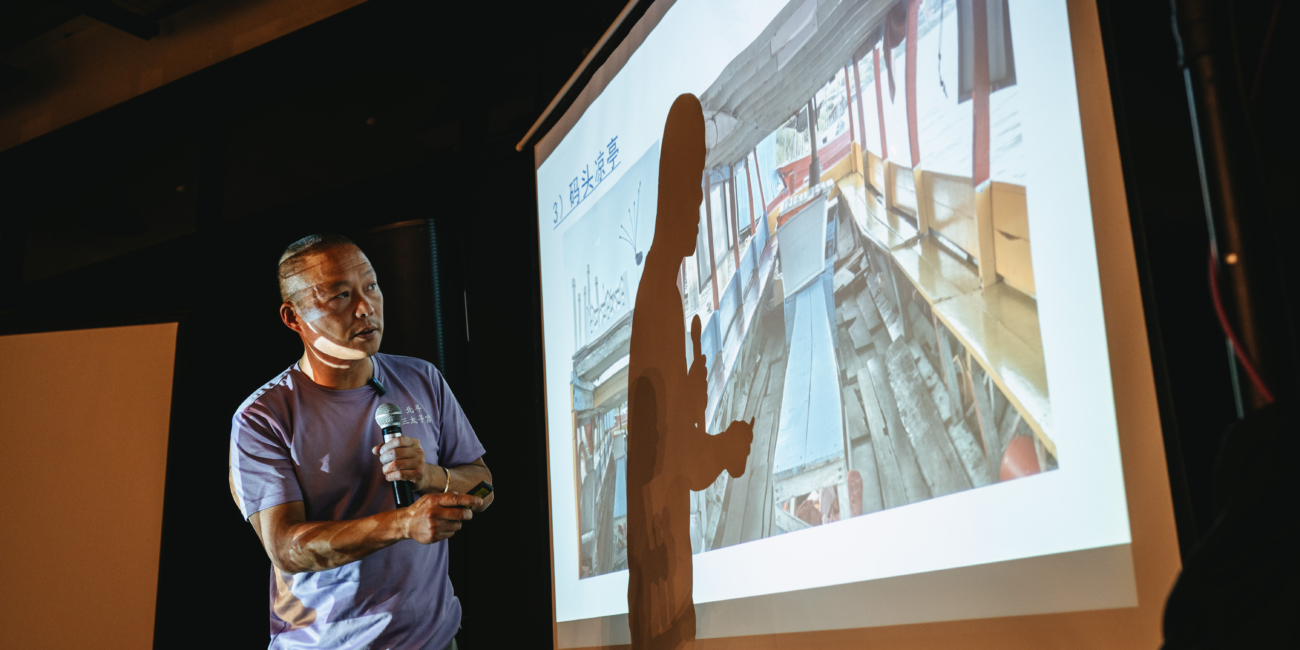
Research Lecture (研究讲座)

8 March 2026, Sunday, 8:00pm

Venue: Event Hall, Level 1, UAB Building (Gat Lebuh China)
地点: 大街路头UAB大厦1楼

‘A Wind-Blown Fire Needs Little Effort’ is a response to three visits to Malaysia by Beijing-based artist He An under the Blank Canvas annual residency programme. On his first visit in August 2024, he was introduced to various local religious rituals and community ecologies. In July 2025 he embarked on a 25-day self-driving journey across both the eastern and western regions of the peninsula, conducting a field study of the country’s broader cultural and social structures. In January 2026 he arrived in Penang for the third time, engaging in in-depth learning with local artisans connected to ritual practices, in an effort to connect his own experiences with the evolving diasporic trajectories of the local Malaysian Chinese community. 

In this lecture, He An presented some of his research gathered over these three trips. The session was moderated by KY Leong.

个展《因风吹火用力不多》是北京艺术家何岸在 Blank Canvas 年度驻地计划下三次到访马来西亚后的回应。2024年8月的首次到访中,他接触并观摩了本地多种宗教仪式与社群生态。2025年7月,他展开为期25天的自驾行程,横跨马来半岛东西两岸,对马来西亚更广泛的文化与社会结构进行田野考察。2026年1月,他第三次来到槟城,向本地与祭祀仪式相关的手工艺人深入学习,试图将自身经验与马来西亚在地华人的族群延异进行连接。

本次讲座中,何岸分享他在这三次行程中所积累的部分研究成果。讲座由Blank Canvas 创办人梁广义主持。

Full Lecture (完整讲座): Watch Here (点击观看)

ABOUT The Artist

He An (b.1970, Wuhan, China), currently lives and works in Beijing. He studied in the Hubei Institute of Fine Arts. He’s practice covers various media, often combining industrial materials to create site-specific installations filled with narrations. He has always been concerning about cultural, historical, political and social issues, this personal wide interest makes works could synchronize with the “current” in geopolitical and aesthetic aspect.

He presented solo exhibitions worldwide including: OCT Box Musuem, Australian Center for Contemporary Art, Ullens Center for Contemporary Art, Galerie Templon, Tang Contemporary Art, HdM Gallery, Madin Gallery and Magician Space, etc. He was also part of numerous major group exhibitions, such as: I Loved You, White Rabbit Gallery, Sydney, 2022; ConsensusMan in Chinese Garden, Pingshan Art Museum/OCT Box Museum, Shenzhen/Shunde, 2020; 2019 Art Changsha, Hunan Museum, Changsha, 2019; Entropy, Faurschou Foundation, Venice, 2019; Overpop, Yuz Museum, Shanghai, 2016; Post Pop: East Meets West, Saatchi Gallery, London, 2014; Carnegie International, Carnegie Museum of Art, Pittsburgh, 2013; Rendez-Vous 2008, Museum of Contemporary Art Lyon, Lyon, 2008); The Real Thing: Contemporary from Art China, Tate Liverpool, Liverpool, 2017, etc.

何岸,1970 年出生于中国武汉,肄业于湖北美术学院,现工作和生活在北 京。其创作涵盖了多种形式,时常结合工业材料营造富有感官叙事的装置 现场。他持续关注文化、历史、政治及社会议题,这一广泛的个人兴趣使其 作品在地缘政治与美学层面均能与”当下”保持同步。

他曾在世界各地举办个展,其中包括:澳大利亚当代艺术中心、尤伦斯当 代艺术中心、华侨城盒子美术馆、Galerie Templon、当代唐人艺术中 心、没顶画廊、HdM 画廊及魔金石空间等。也曾参加过许多重要的国际 群展,如:《I Loved You》,白兔美术馆,悉尼(2022);《合意——中国园林 中的人》,坪山美术馆/华侨城盒子美术馆,深圳/顺德(2020);《2019 第七 届艺术长沙》,湖南省博物馆,长沙(2019);《熵》,林冠艺术基金会,威尼 斯(2019);《波普之上》,余德耀美术馆,上海(2016);《后波普:东方遇见西 方》,萨奇美术馆,伦敦(2014);《卡内基国际艺术展》,卡内基美术馆,匹兹 堡(2013);《约会 2008》,里昂当代艺术馆,里昂(2008);《真实的东西:来 自中国的当代艺术》,泰特美术馆,利物浦(2007)等。

Instagram: www.instagram.com/hean6991
The Artist